11 October 2026
Four numbers from the dirt
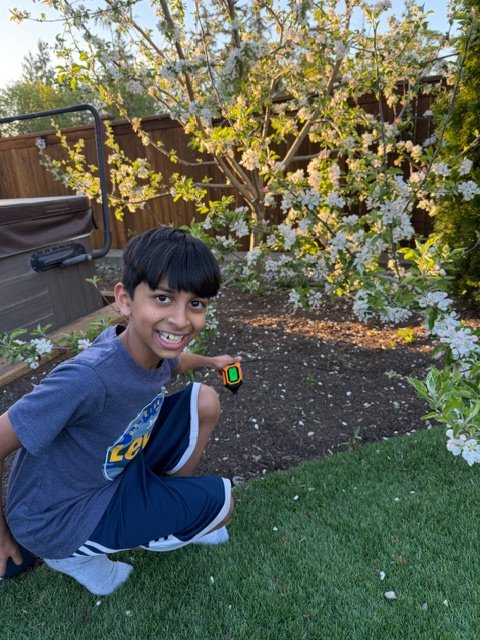
BeeGuide already knows a lot about your garden just from your ZIP code. It knows which bees have been seen near you. It knows how cold your winter gets, how much rain you get, and when your last frost usually is.
But it can't stand in your garden. Two gardens on the same street can be really different. One is sunny all afternoon. The other one is behind a fence and stays soggy for a week after it rains. BeeGuide can't guess that part.
That's what the meter is for. It's cheap, it doesn't need batteries, and you just stick it in the ground where you want your bed.
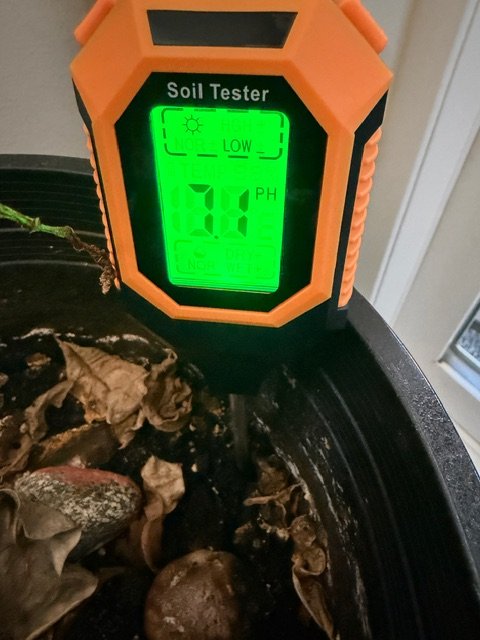
The four things it reads
Water, 1 to 10. This one knocks out the most plants. If a plant likes dry dirt and you put it somewhere soggy, the roots rot. If a bog plant goes in dry dirt, it dries up and dies. In my garden, telling BeeGuide the bed is damp drops the plant list from 380 to 265. Saying it's dry leaves 291. And they're mostly different plants, which is the cool part. The meter gives you a number, and the app turns 1–3 into dry, 4–7 into average, and 8–10 into damp.
pH. This is how acidic the dirt is. It matters because if the pH is wrong, the food is in the dirt but the plant can't actually use it. BeeGuide lets you be off by half a point, because these meters aren't perfect and I didn't want to pretend they are. Here's the thing that surprised me: for my ZIP code, the backup soil map BeeGuide usually uses has no data at all. So without my meter, the app doesn't check pH. My reading isn't a better guess. It's the only one.
Light: LOW, NOR, HIGH. The three settings on my meter are the exact same three buttons in the app. I didn't plan that, I just noticed it later. Light changes the bed the most out of anything. Full sun leaves 380 plants, part shade leaves 285, and real shade leaves only 142. People look at their garden, think "that's bright enough," and guess. Then their plants droop all summer.
Temperature. BeeGuide doesn't use this one, and I think that's worth saying. The app needs to know your coldest winter night, and a meter can't tell you that in October — it only knows today. But the thermometer is still useful. On the day you're planting, it tells you if the ground is warm enough yet. A calendar can't do that.
Was it worth it?
I tested my own bed both ways.
With just my ZIP code, BeeGuide found 380 plants that fit, and 272 you can actually buy. With my three meter readings — acidic, damp, part shade — it was 179 and 135. Seven of the fifteen plants in my bed changed.
So the first version wasn't wrong. It was a plan for a normal garden in my area. The second one was a plan for the exact spot I was kneeling on.
One last thing: these meters aren't fancy science equipment. Push it in the same depth every time, test two or three spots, and use the middle number. If the readings are super different from each other, that tells you something too — your bed probably isn't the same all the way across, and the wet corner needs different plants than the dry end.